

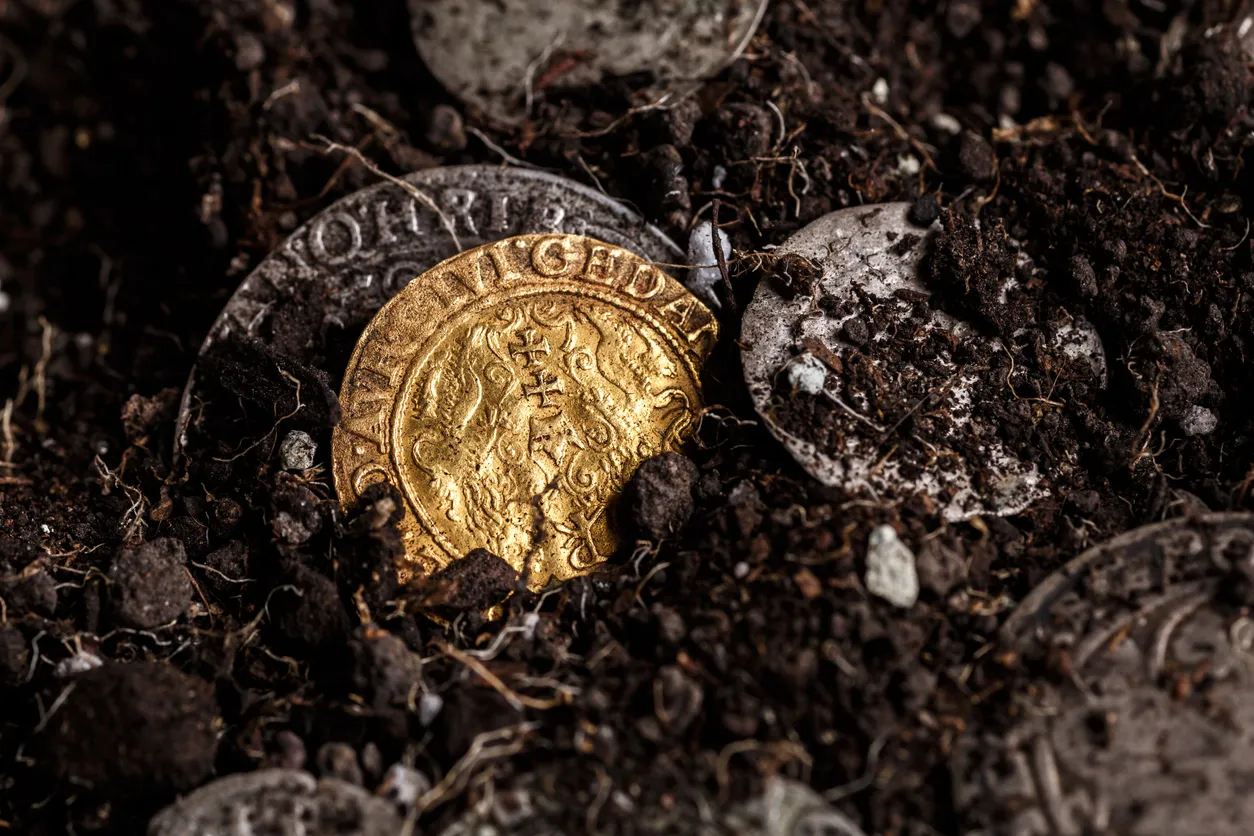
The Gold Standard
In last month’s newsletter – Bitcoin and The Poverty Line. I touched on ‘The Gold Standard’ as I discussed Bitcoin and how it can help to improve prosperity.
The Gold Standard is a controversial topic that economists and politicians have often discussed. Ron Paul, a senator in the United States, has advocated for the Gold Standard in the past, and even Alan Greenspan – previous chairman of America’s Central Bank – The Federal Reserve, has supported its benefits. However, both men have encountered strong opposition in their thoughts. As such, somebody could easily fool you into thinking that The Gold Standard is a complex topic, and it is possible to enter into many convoluted discussions when discussing the merits of it or otherwise.
Bitcoin
I mention it here because Bitcoin is considered a form of digital gold. Its software protocol design is there to mimic the economic properties of Gold, mainly due to its limited supply, as only the creation of twenty-one million Bitcoins is allowed. In addition, it is possible to divide one Bitcoin into 100 million satoshis, and a software upgrade could divide it into even smaller units than that. Both properties are superior in comparison to gold. Add to that the easy ability to transfer Bitcoin worldwide quickly and cheaply and transport it with the utmost physical secrecy, compared to heavy gold – the advantages are not hard to see.
There is so much misconception about The Gold Standard it is hard for people to appreciate why Bitcoin’s comparison to gold is such a fantastic thing. So allow me to enlighten you. This article will demonstrate where the arguments against The Gold Standard lie. I also outline the history of the Gold Standard and why it has led us to where we are today, and why Bitcoin can help overcome the remaining difficulties.
"Historic Mistake"
The most scathing criticism of the Gold Standard is that adherence to it was a ‘historic mistake’ as it led to the Great Depression of the 1930s. As with many theories with hidden agendas, there is far more to the story than this simple statement.
The source of this criticism is the passing of the act of parliament in the UK under Churchill’s Chancellorship, the British Gold Standard Act 1925. This legislation outlawed the circulation of gold in the economy for spending and fixed the price of gold bullion to pay debts between countries.
The purpose of this act was to try and restore the gold standard. A monetary standard that had operated throughout Europe during the late nineteenth century but broke with the beginning of World War I in 1914.
The reason this happened was because the countries of Europe required funding to perpetuate the great war. So their Gold Standards were temporarily suspended, devaluing their currencies and creating the money to pay for the war.
There was a precedent for this as when wars were fought in the past; the understanding was that the loser would pay an indemnity to the winner, which would generally rectify matters; however, the First World War was the first time this occurred on such an epic scale. The entire world was involved, and according to the National Archives, the final costs were staggering, a total of $208 billion.
As explained in my other newsletters – see Bitcoin and Property Rights, this led to the imposition of War Reparations on Germany, directly contributing to the hyperinflation of the Weimar State and the destruction of their middle class.
This outcome wrought terror in other European countries and was likely a contributing factor in establishing this new Gold Standard Act. Britain, responsible as the judge of the world’s reserve currency at that time, felt it was imperative to return to the Gold Standard as soon as possible to prevent a repetition of the Weimar hyperinflation worldwide.
British Gold Standard Act - 1925
Unfortunately, this was like closing the door once the horse had bolted. The additional money created to pay for the war was already in circulation, so this brutal effort to return to the gold standard ultimately created a global banking crisis. To disguise how badly accounting shenanigans had broken the gold standard during the First World War, Churchill set the price far too low at £20.64 per ounce.

The 1925 Act aimed to eliminate gold as money in circulation under ‘The Classical Gold Standard’. It instead established a ‘Gold Exchange Standard’ designed to regain confidence in British banking, as other countries were now allowed to hold their reserves in pounds in addition to gold. Thanks to the Genoa Convention of 1922.
However, not all countries agreed on how this new system would work. Many countries were suspicious and still requested the settlement of their debts in physical gold. In contrast, the United States was persuaded to ‘play the game’ and continued to devalue their currency to help support the price of the Pound Sterling.
As this occurred, Britain’s gold holdings rapidly depleted due to the undervaluation of gold, as other countries bought it and sent back the paper pounds. In the meantime, the price of assets in the US spiralled into a frenzy, with the general public eager to take out loans to invest in the stock market. It all came crashing down in 1929 with the great stock market crash as the discipline of the flawed new British Gold Standard fed into the world economy. Newly created currency units in America finally had to be rapidly removed from circulation by the Bankers.
Banking Crisis
Very few entities were prepared for this. In many respects, the easing of the money supply paid for the war and contributed to rising prosperity or what is commonly known as ‘The Roaring Twenties’ once the war was over. There were good reasons to return to fiscal discipline. Still, the short sharp shock in how Britain managed this precipitated a European banking crisis that eventually extended to the US. The effects of this lasted over a decade and caused immeasurable suffering with the Great Depression and the eventual outbreak of World War II.
Avoiding this tragedy is an oft-cited reason for not returning to a Gold Standard, without recognising that the damage occurred in 1914, not 1925. If we had not left the Gold Standard at all, Europe would not have been able to extend the great war as far as they did, an excess of currency units would never have entered the economy, Weimar Germany would never have happened, nor the Roaring Twenties, the Great Depression or World War II.
The Classical Gold Standard vs The Gold Exchange Standard
When discussing ‘The Gold Standard, ’ terms are essential. The ’Classical Gold Standard’, as opposed to ‘The Gold Exchange Standard’, is when gold circulated in the economy as money. In the 1700s & 1800s, the money gradually transitioned from silver to gold as public confidence needed nurturing. During the 1600s, most of the world used silver as a medium of exchange. The shift to gold began with the establishment of the Bank of England.
As gold circulated in the economy and the usefulness of banks became more commonplace, the general public could still hold banks to account if they mismanaged their finances. So there was a limit to what the banks could achieve through monetary manipulation. However, once the US government approved the creation of the Central Bank of the Federal Reserve in 1913, under the guise of preventing banking panics, financial manipulation became possible.
While the promise to the general public of the Federal Reserve was for greater security to the banking system, unfortunately, the US Governments agreement to this remit turned out to be an epic disaster with the dissolution of over 10,000 banks during the banking panics of the 1930s which the Federal Reserve failed to save!
Let us look at where central banking and The Gold Standard first began.
The First Central Bank
The first Central Bank was the Bank of Amsterdam, established in 1609. At the time, the most common form of monetary exchange was silver. The Bank of Amsterdam was a fully capitalised bank meaning that they could only lend out what they had in their vaults on deposit.

This bank was highly successful for three main reasons.
1. It offered stable exchange rates,
2. There were no capital controls, so anyone anywhere could use it and
3. It offered low-interest rates.
The Bank of Amsterdam, however, experienced a series of crises over time as large debtors failed to make good on their loans, and circumstances intermittently revealed the banks’ records to the public.
Eventually, the Bank of Amsterdam was superseded by The Bank of England.
The Bank of England
The shady establishment of The Bank of England arose as Britain required a loan of £1,250,000 to cover the cost of the wars fought between 1640 and 1689 to establish the Dutch William of Orange as the new monarch of England. The monarch’s religion was a huge point of contention at the time. The efforts to have a protestant monarchy rather than the incumbent Catholic James II precipitated the final takeover.

Part of the promise to those who supported William of Orange was permission to establish this new bank in 1694.
The terms of this loan included the following:
- That the names of those who made the loan remain secret and that they be granted a Charter to establish a Bank of England.
- That the Directors of the Bank of England be granted the legal right to establish the Gold Standard by which –
- They could make loans to the value of £10 for every £1 value of gold they had in deposit in their vaults.
- That they be permitted to consolidate the national debt, and secure payment of amounts due as principal and interest by direct taxation of the people.
So began the journey of creating a new Gold Standard
Isaac Newton
Within two years, Isaac Newton was established as Warden of the Royal Mint, in charge of the country’s coinage. He achieved this role not just because he was a renowned scientist but because he had supported ‘The Glorious Revolution’ that had seen William of Orange gain the throne of England
Isaac Newton approached his role with great vigour and immediately set about addressing the challenge of coin counterfeiting and was very successful in this. Indeed the eventual reputation of the British Currency led to sayings such as ‘sound as a pound’, and this trustworthy money became the foundation of the Industrial Revolution and the British Empire.

Isaac Newton’s role in switching from silver to gold was also important. He set the exchange rate for a gold coin at 21 silver shillings to help stamp out silver counterfeiting. For several decades from 1717, this worked out well for Britain, who paid for its goods with silver while requesting payments in gold. As the country’s reputation and trade increased, so did its gold holdings. By 1880, almost every European country and the British Commonwealth valued their currencies against gold. This stability of exchange rates made this a very prosperous time for trade.
Fractional Reserves
The creation of The Bank of England, however, gave the lenders a great deal of power, as the potential to loan ten times the amount of the gold they had on deposit effectively enabled them to create money—the increase in the availability of capital funded the early industrial revolution factories that emerged in the 1770s.
With this fractional reserve policy of the banks, however, where they held only £1’s worth of gold for every £10 they allowed into circulation, small banks were susceptible to ‘bank runs’ if enough customers decided to claim their gold immediately and all at once, usually instigated by some entity failing to repay their debt.
Such bank runs became the cause of ‘banking panics’ during the late 1800s.
In yet another attempt to obfuscate ‘bad loans’, The US government allowed the creation of the Federal Reserve Bank to avoid this in 1913.
World War I began shortly after that.
Returning to the origin of our story, once Britain achieved the break with the Classical Gold Standard and the use of gold as money in the everyday economy was removed, the way was open to using a Gold Exchange Standard.
The British Gold Standard of 1925 may have failed, leading to the Stock Market Crash of 1929 and the Great Depression of the 1930s. Still, after the Second World War, it was ‘game on’ as the Bankers reestablished the Gold Exchange Standard by using the US dollar instead of the British pound via Bretton Woods. The Nixon Shock and the Petrodollar were then used to transition the world from the ‘Gold Exchange Standard to the ‘Fiat Money Standard’. Finally, the secret Bankers could make out like bandits with their ability to rack up debt and create money worldwide!

The Money Lenders
Interestingly, a common strategy used by the British Empire when attempting to establish its dominion over the world in the 1800s would be to weaken a country by lending it money; doing so limited that country’s ability to defend itself in a war due to overextending itself with previous loans. On this basis, it was easier for the British armies to come in and conquer the weakened nation.
Another strategy used by the Bankers would be to promise financing to both sides of a war, then withdraw the funding from the army they wanted to fail at the last minute. In this way, they could control the outcome, and by using good timing, they could ensure that neither country gained anything substantial from such conflicts.
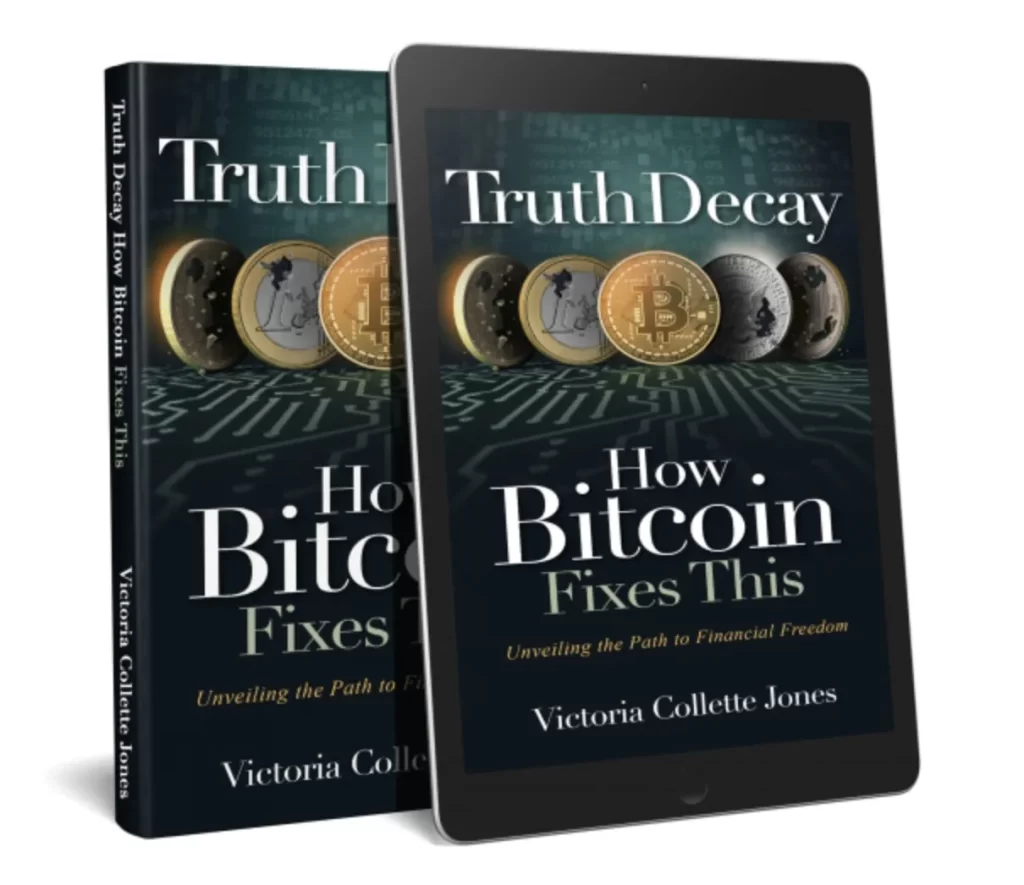
I explore this more in my book Truth Decay – how Bitcoin Fixes This.
Through these wars, created using loans to sovereigns and governments, this long-hidden banking power has caused immense pain and suffering. There have been many attempts to usurp the source of this misery.
While the nature of money was Gold (see Bitcoin and Property Rights), the only possible solutions available were violent ones, as the reward for success in war was physical property. Wars that often begin for tenuous reasons end up requiring a response. Engaging in the drama was the only way to find a resolution.
However, well-hidden enemies will always be cruel foes; unless you can locate them, no amount of violence will bring them to justice.
The Solution
But their money – now there is a weakness…
If the Banker’s manipulations with money have always been the secret power behind the throne, a new system that undermines their plans and hidden mechanisms has a much greater chance of success.
I could argue that introducing a Gold Standard was the initial source of humanity’s demise. The transition of the Classical Gold Standard during the 1800s, while scarce gold circulated in the economy as our money, demonstrated to our recent ancestors a taste of the prosperity they could achieve with sound money. Bitcoin now allows us to recreate this.
Bitcoin gives us access to a source of independent, incorruptible money that hidden entities can’t control or manipulate. One that an individual can hold safely and securely without relying on a bank. If I wanted to bring down some secret Bankers – that is what I would use…
Until next time enthusiasts!
Victoria
Bitcoin - The Revolution
In December 2022 I gave an interview to the Podcast – Forum Borealis on the subject of Bitcoin. We discuss some of the subjects mentioned above – you can listen to it here via Podbean or on YouTube.