


In the many and varied discussions about Bitcoin, there is often much talk (myself included) about how our money has become corrupted. In the past, banks tied the value of the British Pound and the US Dollar to the value of gold, but this changed during the twentieth century and was directly related to the First and Second World Wars (see Bitcoin and The Gold Standard).
While losing the relationship of our money to gold is a valid concern, additional elements of our economic world contribute to the corruption in our financial system.
On 11 January 2024, The United States Securities and Exchange Commission finally allowed the trading of Bitcoin through exchange-traded funds. The average person likely has a minimal idea of what these are or the effect they will have.
In this newsletter, I explore the history of the formation of companies and seek to determine the most likely outcome of a Bitcoin ETF by exploring the history of joint stock companies.
Exploration
The first modern joint stock company originated in the 16th Century, as explorers began to discover and trade with new continents. Such adventures were expensive and risky endeavours, so if many people could contribute a little, more money could be raised, and the financial structure of the new company could reduce the risk of the journey. The first official company chartered by the British Royals was the Company of Merchant Adventurers to New Lands in 1551, which began with 240 shareholders.
Eventually, this became the Muscovy Company, given a royal charter by Queen Mary I of England in 1555. Its royal privilege was a monopoly on trade between Russia and England.
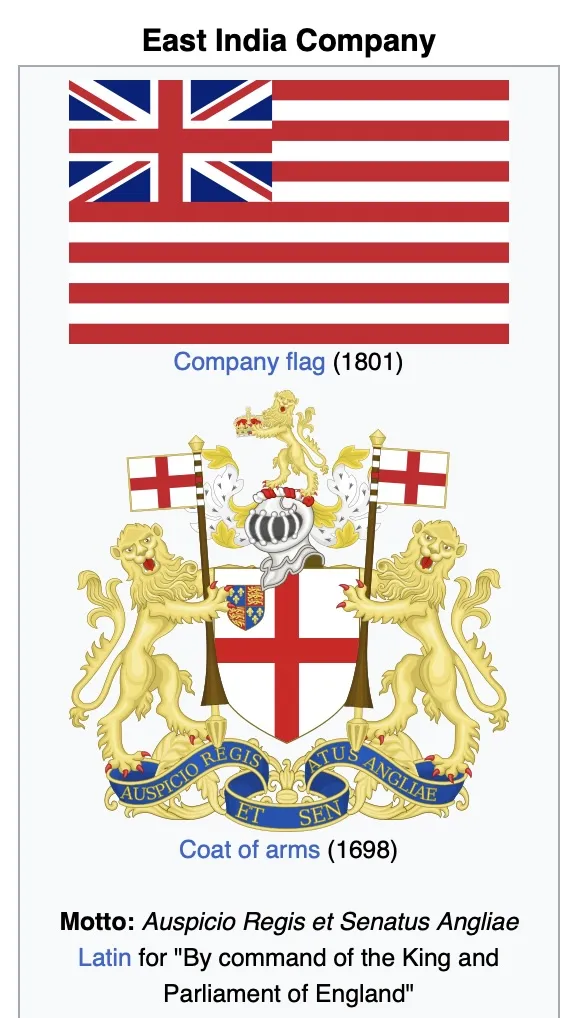
One of the most famous companies from this period was the East India Company, to which Elizabeth I provided a royal charter on December 31, 1600. This company became so large and successful that it eventually ruled a large proportion of India and parts of East Asia. Its standing army was more extensive than the British Government, with 260,000 soldiers!
Such success drew the attention of many others who also wanted to benefit from the rewards of these successful projects, as those that did well produced magnificent profits for their owners.
At the time, it was more usual for single voyages to raise money and for the profits to be liquidated and distributed to their members on their return home. Due to the challenges involved, including disease, shipwreck and piracy, forming a corporation eased the management of risks. The risks included the profits from the distribution of goods on the return home, as demand for these often varied based on the seasons.
The formation of such a corporation created such advantages for the English; if the Dutch (their main competitor) had failed to follow suit, the inequitable management of risks would have ruined them.
The Dutch East India Company was established two years later in 1602. The interest in the company was overwhelming, with 1,143 subscribers who invested ƒ3,679,915 or over €100 million in today’s money.
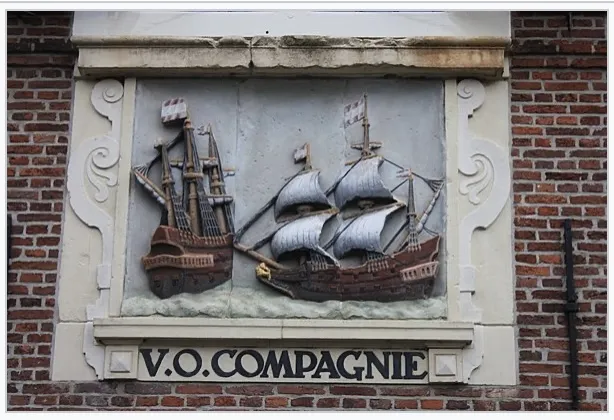
By this time, there was a healthy interest in the new company’s profit potential and great interest in buying and selling the shares with other investors. The East India House in Amsterdam kept the administration of these transactions, and brokers took a small fee to ensure the paperwork was sound and secure. In this way, ‘securities’ and speculative trading was born.
The Dutch East India Company eventually exceeded the English East India Company by a factor of five regarding the traffic of goods and enslaved people. It was massively successful, yielding profits of up to 400% and became the foundation of the Dutch Empire.
Central Banking
Interestingly, these companies were coalescing and requiring some centralised organisation before establishing the first modern central Bank in Amsterdam in 1609 (see Bitcoin and the Gold Standard).
In reality, this tells us that the needs of these companies drove the need for a central bank as they required a mechanism to store their wealth, accept investments and distribute profits, especially considering that they were now operating on behalf of groups of people rather than acting for individuals.
Unfortunately, as with most organisations that rely solely on human integrity, we cannot trust some individuals, and the invention of ‘corporations’ opened a window to financial corruption.
One could argue that our current problems in finance lie in corporations being allowed to form in the first place, but in those days, the world was organised and operated by centralised and influential players. It would be another fifty years before the English defeated their monarch and began to establish power in a more decentralised manner with a parliament, but that hadn’t happened yet.
As with any revolutionary new system, over time, crises occur that require new rules to prevent certain devastations from occurring again. Examples from this era include the Tulip mania between 1634 and 1637.
Following the establishment of the Bank of England in 1694, a similar situation developed in England and France in 1720 with the Southsea and Mississippi bubbles, which I discuss in the newsletter Bitcoin and The Southsea Bubble. The courts and new laws eventually settled these situations, which had to find an amicable solution for many distressed investors.
In response to the intense speculation and subsequent failure of the Southsea Bubble, England passed the Bubble Act in 1720, which prohibited forming new companies without a royal charter. This constrained investment until the English Parliament repealed it in 1825. By this point, the government needed a new form of economic stimulation as the British Empire suffered from the costs and destruction of the Napoleonic wars. (See Bitcoin & Debt).
Corporations
In 1844, an act of parliament in England expanded access to joint stock companies. Before this, many ‘associations’ of people had developed to run businesses and ‘building societies’, but these created the complication of having to sue several individuals at once if something went wrong. Allowing companies to have singular legal status made it possible to sue one legal entity in a court of law.

The English Parliament secured limited liability for companies in 1856. This new law meant that no individual could be sued for the debts of a company, thereby reducing the risks of poor management. In addition, companies were allowed to exist in perpetuity, whereas, before this act, they would usually have had a limited lifespan. For example, the first royal charter for the East India Company was for 15 years, and the monarch would then extend it later.
These legal permissions had profound consequences and ultimately set the stage for the Second Industrial Revolution, making the British Isles a world power ahead of most of Europe. Many historians marvel at the rate of industrial production in the UK at that time while Europe appeared to lag.
Ultimately, the structures for financing companies built in the English Parliament and the solid reputation of the Bank of England for handling money allowed Britain to become so successful.
With these new structures, companies could raise vast amounts of capital for little risk and were effectively permitted to socialise their losses. Mismanagement of a company could result in bankruptcy, but investors could not ask a single individual to repay the losses. Those who lost out due to involvement with the company had to manage the consequences. Holding company directors accountable in other ways was still possible, which presumably was seen as an effective deterrent.
These privileges have followed us through time and are still in use to the present day. The power of such companies has made a small proportion of the world’s society extremely wealthy. In contrast, the rest have suffered a cumulative burden from such socialised losses ever since. Many countries that provided wealth for the British under the chartered royal companies and the limited companies of the British Empire suffered terribly due to their exploitation.
Velocity of Money
I noticed this graph in a video recently. It caught my eye as the apparent exponential growth correlates very well with the changes in the policies around joint stock companies.
Some may expect that such growth would correlate with the establishment of central banks; however, as previously argued, I surmise that the joint stock companies gave rise to the banks rather than the other way around.

Indeed, introducing securities trading increased the velocity of money (the rate at which money changes hands in an economy) to a phenomenal degree. The financial rewards of securities trading paid off and produced unprecedented prosperity for the Dutch and the British.
Such an outstanding financial result must have been captivating as it manifested and inspired many to seek even more fantastic rewards along the same lines. Hence, we see the evolution in the policies around companies introduced in the British Parliament in the 1800s.
In Summary
The advantages of joint stock companies can be summarised as follows:
- It solves the problem of suing many individuals at once.
- Allows for collaboration and profit sharing.
- Raises large amounts of finance.
- Limited liability saves a single individual from being liable for the debts – reducing individual risk.
- Can exist in perpetuity in the absence of those who initially created it.
- Massive job creation through the administrative tasks involved in securities and finance.

However, these are similarly matched by corresponding disadvantages:
- Risks are ‘socialised’, the cumulative effects leading to a devastating effect on society over time.
- Companies can become too powerful, large and unwieldy to keep accountable. (See the current Post Office scandal in the UK as one recent example).
- An increase in the velocity of money distorts GDP figures and introduces moral hazards into an economy. (People are inclined to take risks they otherwise wouldn’t if the corporate structure didn’t protect them).
- A workforce that only knows how to ‘administer’ rather than be productive and creative.
Conclusion
The net effect is a growing contrast between the rich, who understand how the system works and the poor, who don’t. Even worse, the rich have little incentive to tell the poor what is happening because they rely on the compliance of the poor and the average employed worker to take advantage of the privileges they have acquired through their knowledge and historical precedent. Even if they do find out, the ‘poor’ are either too downtrodden to believe them or have finite resources to do anything about it anyway.
Ironically, the crises of the various ‘bubbles’ in the 1600s and 1700s that stimulated the ideas for new laws to fix the problems did not make the problems go away. The Government fixed each issue with another creative solution. The Central Bank of Amsterdam eventually gave way to the Bank of England because it suffered from the bankruptcies of some prominent clients. The Bank of England rectified this problem with a fractional reserve, which worked well for several decades until that resource was exhausted and met its crisis point in the early 20th century with the First and Second World Wars (see Bitcoin and The Gold Standard).
Even now, the widespread economic discussion revolves around the management of ‘boom-bust cycles’ and controlling inflation, whereas those who ‘know’ understand that these are just natural consequences of a financial system that the government has patched with a seemingly never-ending list of laws that are becoming increasingly ineffective. I address this in chapter nine of my book Truth Decay – How Bitcoin Fixes This.

Bitcoin
Based on laws and agreements that governments have readjusted over time. The financial system is now like a city built on sand. The peril and beauty of Bitcoin is that this technology is now calling time on this system.
The Bitcoin developers have built a software protocol on a carefully thought-through set of rules that have become increasingly impossible to change. Therefore, when the next financial crisis occurs, a small group of individuals can’t discuss and decide on the best course of action against the interests of the many. Bitcoin becomes the incorruptible judge by which the Bitcoin software protocol has decided the outcome.
If you don’t own Bitcoin or have trusted the wrong people with your investments and business, it will be hard luck next time; no appeal to the government will save you because they won’t have the Bitcoin either!
Bitcoin is like a parasite of truth that will bring a reckoning.
Until next time enthusiasts
Victoria
Bitcoin - Year in Review
Watch here as I discuss Bitcoin’s Year in Review with my colleagues on the World Crypto Network, including developments with the Bitcoin ETF.